Meet the Founder
Twenty years inside some of the most diverse knowledge traditions in the world — ancient apprenticeship systems, remote island communities, mountain cultures, and rapidly modernizing societies — watching the same pattern repeat everywhere. The knowledge that mattered most was never written down.
Cameron Covarrubias · Founder, EdTerm
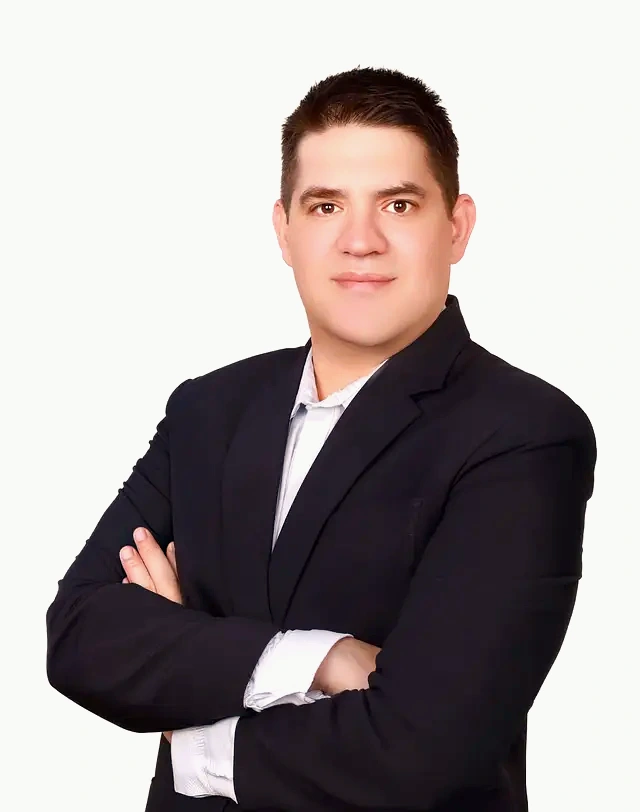
"I wasn't built for traditional education — but I was built for learning. EdTerm came from two decades of watching wisdom disappear the moment the person carrying it walked out the door."
— Cameron Covarrubias, Founder
The Journey
EdTerm wasn't built from a business school thesis. It was built from twenty years of firsthand observation — inside the oldest wisdom transfer systems in the world, and inside the communities where that transfer was breaking down.
At 16, I entered a four-year Japanese culinary apprenticeship — one of the oldest living systems of knowledge transfer in the world. The most valuable knowledge was never written down. It lived in instinct, in the relationship between a master and an apprentice willing to watch, fail, and try again. This was my first education in how wisdom actually moves between human beings — and why no manual or training program can replicate it.
"The knowledge that mattered most couldn't be found in a textbook. It had to be earned."Years living in the Mariana Islands showed me what happens when traditional knowledge transfer systems break down under political and economic pressure. Chamorro and Palauan communities preserving identity, language, and generational wisdom outside any formal institution — and losing it faster than anyone was documenting it.
"The most at-risk knowledge is the kind no one thinks to preserve until it's already gone."Four years based in the region recognized as the birthplace of the heli-ski industry — moving between extreme mountain environments and coastal fishing towns. In both worlds, expertise wasn't certified. It was inherited, passed person to person through seasons of proximity and hard-earned judgment. I watched what happened when the human chain of transmission broke. The lessons didn't transfer to manuals. They disappeared.
"In extreme environments, you stop pretending that formal knowledge is enough."Time spent throughout Nepal's mountain villages and jungle regions deepened my understanding of human resilience and the ways communities preserve meaning through oral tradition and lived experience rather than institutional structure. Wisdom here wasn't a supplement to the system — it was the system.
"Some communities have always known what institutions are only now forgetting."Moving through rapidly developing cities while engaging with traditional food culture, education systems, and everyday social structures revealed the tension between modernization and cultural continuity at enormous scale. Generational knowledge, craftsmanship, and lived experience were disappearing not through neglect but through speed — societies evolving faster than the systems designed to preserve them.
"When a society moves faster than its memory, the loss is invisible until it's permanent."Engagement with researchers, universities, and international academic communities across Thailand, Qatar, and beyond brought the pattern into focus. The problem was universal. The methodology needed to address it — structured, scalable, culturally adaptable — didn't exist. EdTerm was built to create it.
"Every culture has a different answer to the same question: how do you pass on what matters most?"EdTerm is not a technology company that identified an education problem. It was built by someone who spent twenty years inside the problem — watching wisdom transfer succeed in ancient systems and fail in modern ones, across some of the most diverse knowledge traditions in the world.
The Wisdom Journalism methodology was not designed in theory. It was shaped by direct observation of how knowledge actually moves between people — and what causes it to stop moving permanently.
Not research about wisdom transfer — lived experience inside the oldest and most demanding systems of it on earth.
The same pattern appears everywhere: the knowledge that matters most is the kind no institution was designed to capture.
No institutional affiliation shaped this methodology. It was built by someone who learned everything through experience — which is exactly what the Human Wisdom Database is designed to preserve.
The Wisdom Journalism framework passed double-blind peer review and is being presented at ACE2026 in Tokyo, November 2026.
Whether you are a hospital system facing an accelerating retirement wave, a university looking to give journalism students a new professional purpose, or a researcher who sees the same problem from a different angle — we want to talk.
Become a Partner